





Protecting Concrete Pavers From Damages Caused by De-icing Salts
Each year Canada and the northern United States face hostile temperatures during the long winter months. When the thermometer dips below the freezing point, large amounts of snow and ice can quickly cover the ground, increasing the risk of falls and the difficulty of transit.
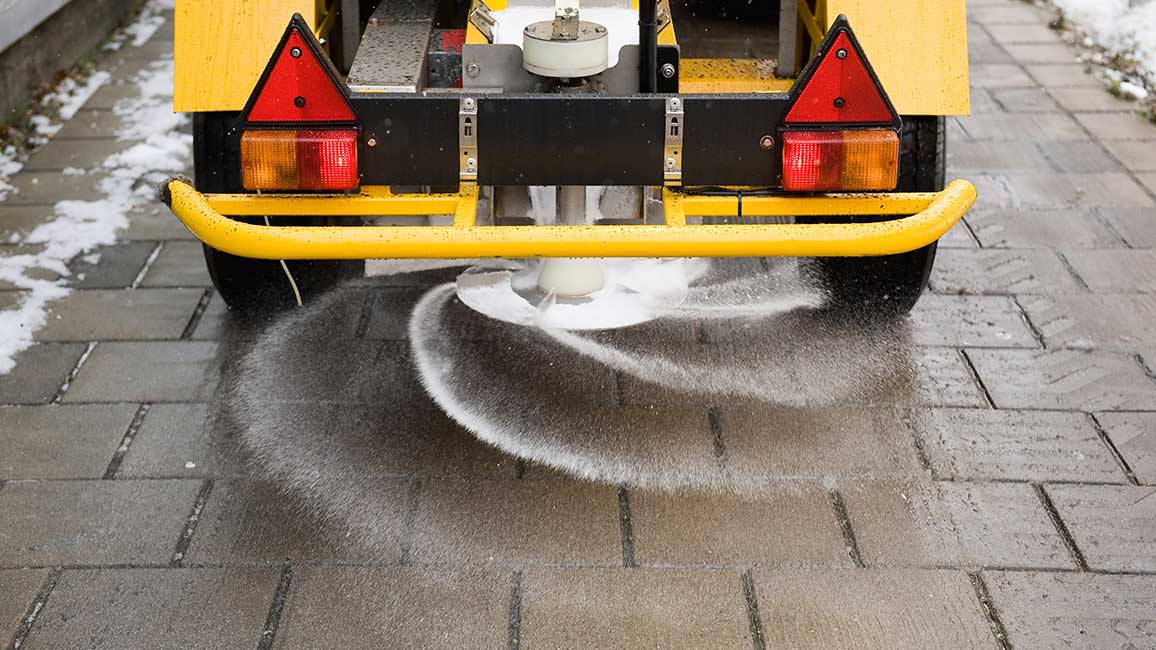
To counter this situation, de-icing salts are often applied on roads and pedestrian areas to speed up the melting of ice and snow. Even though they are effective, these products can also have detrimental effects on concrete, brick, natural stone, as well as other building materials.
Applying a protective sealer is the best way to preserve the aesthetics of exterior surfaces, all the while prolonging their durability.
In the following article, we will look at the potential damages caused by the application of de-icing salts on concrete and explain why Techniseal sealers are your best choice for the optimal protection of exterior surfaces.
How do de-icing salts work?
Contrary to popular belief, de-icing salts don't directly have harmful effects on concrete pavers and other exterior building materials. Rather, it is the chemical reaction that results from their interaction with water, snow, and ice that can end up causing damages.
The freezing point of natural water (the temperature at which water "freezes") is around 0˚C. When de-icing salts are applied to frozen areas, they melt snow and ice by significantly lowering their "natural" freezing point, thereby accelerating the melting process.
How can de-icing salts damage concrete pavers?
During the melting process, the chemical reaction detailed above leaves behind runoff water with a high concentration in sodium. Because this residual liquid has a lower freezing point than straight water, it will freeze (and thaw) more often.
When pavers are not properly sealed and protected, water can more easily penetrate the pores of concrete. Each time the freezing point is attained, the water contained inside concrete products expands. Contrarily, each time temperatures climb above the freezing point, the water contracts.
The pressure of alternating freeze and thaw cycles is what causes concrete to chafe and crumble. As saltwater goes through an increasing number of these cycles, the aging process of concrete is significantly accelerated because of its exposition to high-sodium runoff.
How can the application of a sealer protect concrete pavers?
In summer and winter alike, the best way to preserve the aesthetic appearance and good condition of exterior installations is the application of high-end protective sealers. These allow for the formation of a physical or chemical protective barrier that separates the substrate from various potential contaminating agents.
In addition to significantly reducing water infiltration, the application of a protective sealer prevents harmful substances from penetrating the pores of the concrete. It has been proven that the "life expectancy" of a sealed installation exposed to de-icing salts is 3 to 5 times longer than that of an untreated surface.
Techniseal Protective Sealants: A Reliable and Effective Choice
Since 1984, Techniseal offers hardscape experts a wide range of high-end products for the installation, maintenance, and protection of exterior surfaces. Today, our brand is the first choice of thousands of landscape contractors across North America, Europe, and Australia.
Techniseal's world renown first-grade sealers are the most reliable products for the optimal protection of concrete, brick, natural stone, as well as most exterior building materials.
Made from first-quality ingredients and resins, our hardscape sealers are the best way to keep outdoor installations looking their best for many years.
We offer products that are perfectly adapted to all situations:
- Our WR7 waterproof sealant can be applied on both horizontal and vertical surfaces.
- Our iN sealant offers optimal protection of paved surfaces without ever altering their original color.
- Our EV sealer protects concrete pavers from weather damages and leaves them with a beautiful satin finish.
These are just a few examples taken from our large range of protection products for exterior installations. To learn more, visit our website or contact your regional Techniseal representative today.